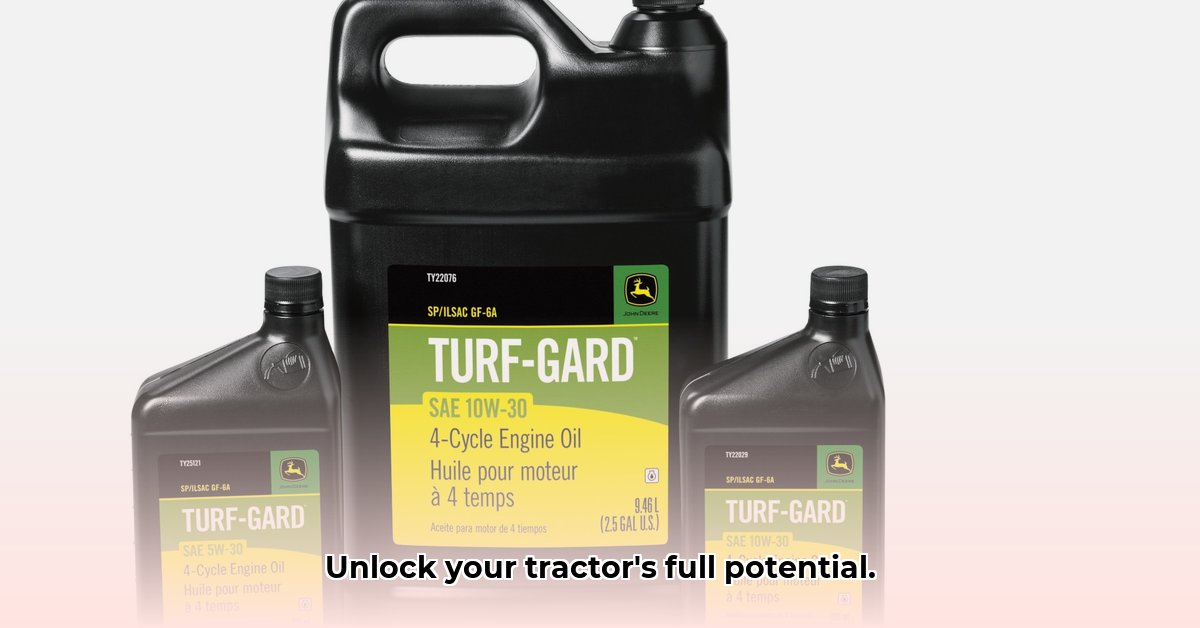
Choosing the right oil for your John Deere tractor is crucial for maximizing engine life, fuel efficiency, and environmental sustainability. This guide provides a step-by-step process for selecting and changing your tractor's oil, ensuring both optimal performance and responsible environmental stewardship. Did you know that using the wrong oil can reduce fuel efficiency by up to 10%? For more information on hydraulic oil, check out this helpful resource: Hydraulic Oil Guide.
Identifying Your John Deere Tractor Model
Before you select oil, find your tractor's model number. This unique identifier, usually found on a metal plate near the seat or engine, is essential for determining the correct oil type. Your owner's manual will also display this information prominently. Note this number down; it's your key to optimal performance.
Locating the Recommended Oil Type
Consult your owner's manual for John Deere's recommended oil type and specifications. This manual provides detailed information on viscosity grade (SAE), API certification (e.g., CJ-4, CI-4), and other crucial requirements specific to your tractor model. If you can't locate your manual, John Deere's website ([1]: https://www.deere.com/en/) offers comprehensive lubricant guides searchable by model number. Failing to use the correct oil could void your warranty.
Understanding Oil Specifications: Decoding the Jargon
Several key factors influence oil selection:
Viscosity Grade (SAE): This number (e.g., 10W-30, 15W-40) indicates the oil’s thickness at different temperatures. A lower number means better cold-weather flow, while a higher number provides better protection at high temperatures. Your owner's manual specifies the correct viscosity for your tractor.
API Certification (API): The American Petroleum Institute (API) sets performance standards for engine oils. The API certification (like CJ-4 or CI-4 for diesel engines) ensures the oil meets specific requirements for protection and performance. This is key for engine longevity.
Manufacturer-Specific Requirements: John Deere might have additional specific oil requirements. Always prioritize the recommendations in your owner's manual.
Step-by-Step Oil Change Instructions
1. Preparation: Warm up your tractor to slightly warm the oil. Gather your tools: new oil (the correct type!), a new oil filter, a wrench, a drain pan, funnel, and gloves. Safety is paramount!
2. Draining the Old Oil: Locate the oil drain plug (consult your manual). Position your drain pan and carefully unscrew the plug, allowing the oil to drain completely. This can take 15-30 minutes.
3. Replacing the Oil Filter: Unscrew the old oil filter and install the new one, lightly lubricating the gasket with new oil to ensure a proper seal. Avoid over-tightening!
4. Refilling with New Oil: Once the old oil is drained and the new filter is in place, replace the drain plug. Using a funnel, add the correct amount of new oil specified in your owner's manual, avoiding overfilling.
5. Checking the Oil Level: Use the dipstick to verify the oil level. Add more if necessary to reach the “full” mark. Run the tractor for a few minutes, then check again.
6. Proper Disposal: Used oil is hazardous waste. Recycle it responsibly at an approved facility, auto parts store, or recycling center. Never drain oil into the ground or a storm drain.
Troubleshooting Common Oil-Related Issues
Unusual Engine Noises: These might indicate low oil pressure or incorrect oil viscosity. Check the oil level and type; consult a mechanic if the issue persists.
Oil Leaks: Persistent leaks suggest potential problems with seals or gaskets. Seek professional attention promptly.
Difficult Starting (Cold Weather): Incorrect oil viscosity can make starting difficult in cold weather.
Conclusion: Sustainable Practices for a Thriving Farm
Using the correct John Deere tractor oil is essential for engine longevity, fuel efficiency, and ultimately, sustainability. This detailed guide empowers you to make informed decisions about your equipment maintenance, contributing to both a healthy tractor and a sustainable farming operation. Remember, regular oil changes and proper disposal are critical for environmental responsibility.